Best Cars for Tall People in 2026 — Verified Legroom and Headroom
The best cars for tall drivers in 2026 — verified front legroom and headroom from manufacturer spec sheets. SUVs, sedans, trucks, and EVs ranked for drivers 6'2" through 6'8"+.
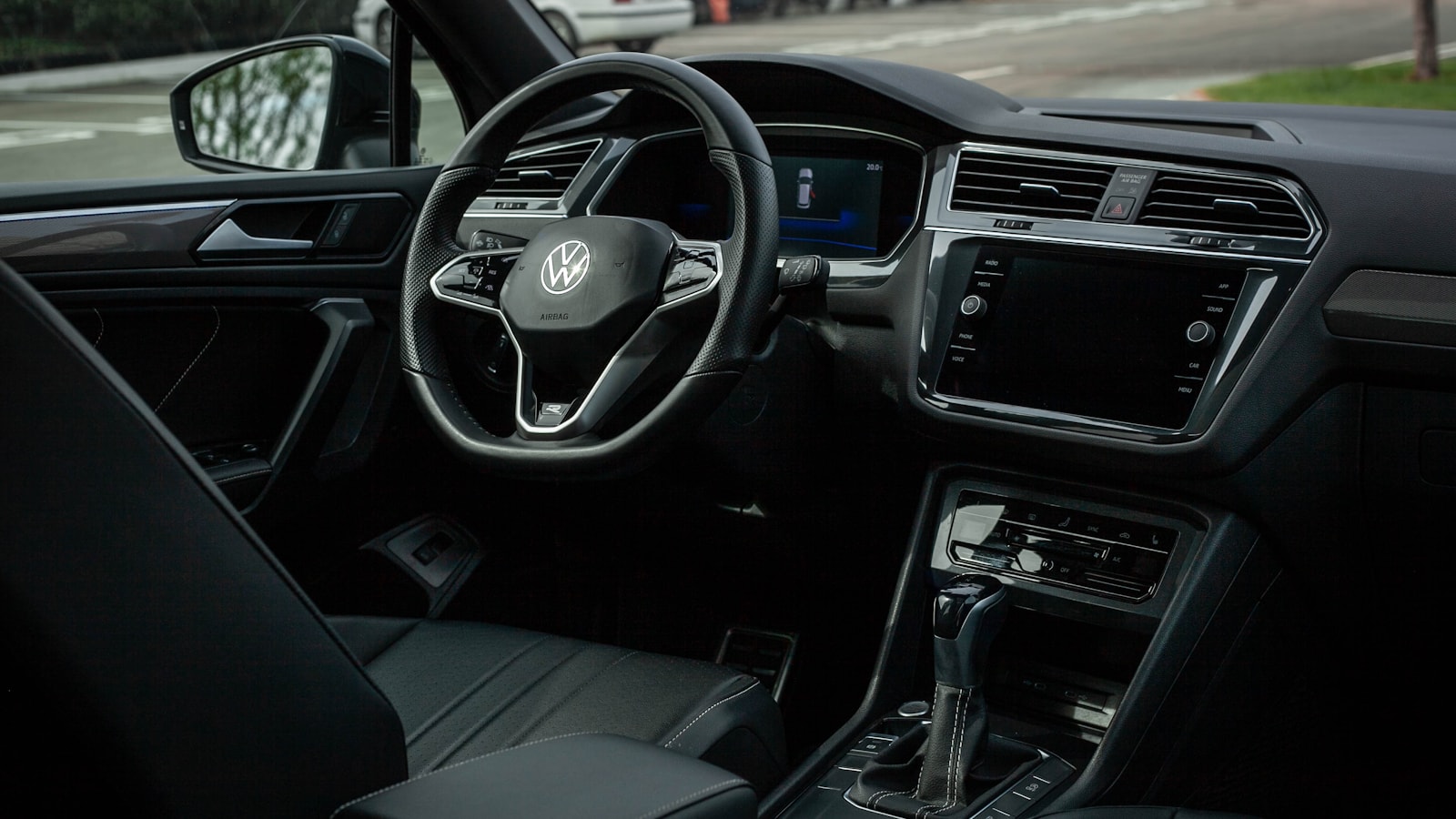
If you’re tall and shopping for a car, you’ve already learned to read between the lines. “Spacious” means nothing. “Premium driving position” means nothing. The only numbers that matter are front legroom and front headroom in inches — and even those don’t tell the whole story, because they don’t capture seat travel range or steering wheel telescoping distance.
This guide ranks the best cars for tall drivers in 2026 using only verified specs from manufacturer spec sheets, cross-referenced with at least one independent source per vehicle (Edmunds, Cars.com, Kelley Blue Book, or U.S. News). Where real-world reports from 6’4”+ drivers contradict the spec sheet, we’ve flagged it.
The Short Answer
For drivers 6’2”–6’4”, the Honda Accord (42.3” legroom) is the strongest sedan and the Subaru Forester (43.3” legroom) is the best value under $30K. For drivers 6’5”+, the Chevrolet Tahoe (44.5” legroom, 42.3” headroom) is the top SUV and the Chevrolet Silverado 1500 Crew Cab (44.5”/43.0”) is the top pickup. For drivers 6’8”+, the Chevrolet Suburban is essentially the only mainstream answer. The best mainstream EV is the Tesla Model Y (41.8”/41.0”), helped by the absence of an overhead headliner mechanism.
Verified Front Specs by Vehicle (2026 Model Year)
| Vehicle | Front Legroom | Front Headroom | Body Type | Starting MSRP |
|---|---|---|---|---|
| Chevrolet Tahoe | 44.5” | 42.3” | Full-size SUV | $63,495 |
| Chevrolet Silverado 1500 Crew Cab | 44.5” | 43.0” | Pickup | ~$40,000 |
| Ford F-150 SuperCrew | 43.9” | 40.8” | Pickup | $39,330+ |
| Subaru Forester (base, no moonroof) | 43.3” | 41.2” | Compact SUV | $29,995 |
| Honda Accord | 42.3” | 37.5” | Sedan | $28,395 |
| Toyota Camry (no moonroof) | 42.1” | 38.3” | Sedan | $29,000 |
| Tesla Model Y | 41.8” | 41.0” | EV crossover | $41,380 |
| Hyundai Ioniq 5 (SE/SEL) | 41.7” | 39.8” | EV | $35,000 |
| Kia Telluride | 41.4” | 40.9” | Midsize SUV | $36,800 |
| Toyota Sequoia | 41.2” | 39.3” | Full-size SUV | ~$64,000 |
| Honda Odyssey | 40.9” | 38.7” | Minivan | $44,245 |
A note on Toyota Sequoia. Several articles online still cite 44.5” front legroom for the Sequoia. That figure appears to be Tundra crew-cab data that crossed into Sequoia listings. The verified 2026 spec from Toyota.com and three independent sources is 41.2”. We mention this because it’s exactly the kind of misinformation that drives a tall buyer to test-drive the wrong vehicle.
What to Actually Look For in a Car if You’re Tall
Front legroom and headroom are the two non-negotiable numbers, but they aren’t the whole picture.
Front legroom isn’t measured the same way across brands. Most manufacturers measure from the heel point (where your heel sits on the floor) to the front of the seat cushion. A vehicle with 42” of “legroom” on paper can feel cramped if the steering wheel sits 8” closer to the driver than in another vehicle with the same number. The best way to read the number: relative comparison between similar vehicles, not as an absolute measurement of stretch-out room.
Headroom changes with moonroofs. Almost every vehicle in this guide loses 0.7”–1.3” of front headroom when you add a moonroof, panoramic roof, or vision roof. If you’re 6’5”+ and considering a vehicle close to its headroom ceiling, buy a trim without the moonroof. The Subaru Forester goes from 41.2” to 40.0” with the panoramic roof. The Hyundai Ioniq 5 Limited loses 0.7” to its vision roof.
Telescoping steering is non-negotiable. Every vehicle in this guide has a tilt-and-telescope steering column standard — it’s effectively industry standard in 2026 for non-exotic vehicles. The relevant variable is how far the column telescopes. The Mercedes-Benz E-Class is repeatedly cited by tall reviewers for unusually long telescoping range; in mainstream brands, the Chevy full-size platforms (Tahoe, Suburban, Silverado) and the Ford F-150 also stand out.
Seat travel matters more than the spec sheet shows. No manufacturer publishes the front seat’s rearward travel distance in inches as a standard spec. The proxy: the difference between front legroom and rear legroom. A vehicle where the front seat can slide further back tends to have a wider gap. The Chevy Tahoe and the Honda Odyssey both have unusually long seat travel ranges that tall-driver forums confirm — the Odyssey’s 40.9” front number is misleadingly modest because the seat travels much further back than the static measurement suggests.
Roofline shape matters. A coupe or sloping-roof crossover with a stated 38” of headroom often feels worse than an upright SUV with 38” because the headroom isn’t usable at the front of the seat where your head actually sits. The Acura Integra has 37.6” of headroom on paper, but the roof slopes so aggressively that anyone 6’2”+ is hunching. The Kia Telluride has nearly identical numbers but feels far more spacious because the roof is upright over the front seats.
Our Top Picks
1. Chevrolet Tahoe — Best Overall SUV for Tall Drivers
Best for: Drivers 6’4”+ who want the largest combined front legroom + headroom envelope in a mainstream SUV Front legroom: 44.5” | Front headroom: 42.3”
The Tahoe is the default answer for tall drivers shopping a non-luxury SUV. The combined 44.5”/42.3” front envelope is the largest in its segment, the front seat travels rearward further than almost any mainstream vehicle, and the tilt-and-telescope steering column has the long throw to match. GM full-size SUV forums consistently report comfortable fit up to roughly 7’2” — the kind of validation no spec sheet provides.
Two real caveats. First, the third-row legroom is genuinely cramped — fine for kids, painful for tall passengers. Second, the fuel economy and price reflect the size — this isn’t a budget pick. For the right tall driver, neither is a dealbreaker.
Starting MSRP: $63,495 (LS) Where to shop: [AFFILIATE LINK: TrueCar] · [AFFILIATE LINK: CarGurus] · [AFFILIATE LINK: Carvana]
2. Honda Accord — Best Sedan
Best for: Tall drivers 6’2”–6’5” who want a sedan and don’t need SUV space Front legroom: 42.3” | Front headroom: 37.5”
The Accord is the best mainstream sedan for tall drivers — period. 42.3” of front legroom is class-leading among midsize sedans, the seat track travels far rearward, and the tilt-and-telescope column adjusts more than the spec sheet implies. A 6’6” driver on DriveAccord reported the Accord fit them better than most cars they’d driven, with only “minor sunroof clearance” complaints — which is exactly the kind of nuance the spec sheet misses.
Skip the moonroof trims. Headroom drops noticeably with the sunroof package; LX and SE trims preserve the maximum overhead clearance. For drivers 6’5”+, the LX trim is the right pick despite being the entry trim — the moonroof on EX or Touring is not worth the inch of headroom.
Starting MSRP: $28,395 (LX) Where to shop: [AFFILIATE LINK: TrueCar] · [AFFILIATE LINK: CarGurus] · [AFFILIATE LINK: Carvana]
3. Subaru Forester — Best Value Under $30K
Best for: Tall drivers shopping under $30K who want a real SUV envelope Front legroom: 43.3” | Front headroom: 41.2” (base, no moonroof)
This is the budget answer. At $29,995 starting, the Forester delivers 43.3” of front legroom and 41.2” of headroom — numbers competitive with vehicles costing $15,000 more. Subaru’s upright body style is what makes it work: the roof is flat over the front seats, not sloping like most crossovers in this price range. A 6’6” Outback owner (same platform philosophy) described it as “plentiful leg room and epic headroom.”
The panoramic moonroof costs you 1.2” of headroom (down to 40.0”). For tall drivers, the base trim without the moonroof is the right configuration. The all-wheel drive is standard, which is unusual in this price range.
Starting MSRP: $29,995 Where to shop: [AFFILIATE LINK: TrueCar] · [AFFILIATE LINK: CarGurus] · [AFFILIATE LINK: Carvana]
4. Ford F-150 SuperCrew — Best Pickup
Best for: Tall drivers who need a pickup Front legroom: 43.9” | Front headroom: 40.8”
The F-150 in SuperCrew configuration is the default tall-driver pickup. The 43.9”/40.8” envelope handles drivers comfortably up to about 6’6”, and the SuperCrew cab specifically extends the front seat travel rearward more than the regular cab. Higher trims add power telescoping steering — useful for fine-tuning fit.
Important: The SuperCab and Regular Cab configurations cut seat travel substantially. If you’re tall, only the SuperCrew works. The same is true on most pickups — extended/quad cab variants usually compromise front-seat space.
Starting MSRP: $39,330 (XL Regular Cab); SuperCrew starts higher Where to shop: [AFFILIATE LINK: TrueCar] · [AFFILIATE LINK: CarGurus] · [AFFILIATE LINK: Carvana]
5. Chevrolet Silverado 1500 Crew Cab — Best Pickup for 6’5”+
Best for: Drivers 6’5”+ who need a pickup Front legroom: 44.5” | Front headroom: 43.0”
The Silverado 1500 Crew Cab matches the Tahoe’s 44.5” legroom and exceeds it on headroom at 43.0” — the largest combined front envelope in any mainstream pickup. A 6’7” driver on a tall-people car forum specifically called out the Chevy full-size trucks as fitting well, while flagging the Ram 3/4-ton as too tight on legroom. The Silverado’s tilt-and-telescope range and seat travel are tuned for the same envelope.
Crew Cab is essential. As with the F-150, the smaller cab configurations compromise space.
Starting MSRP: ~$40,000 (Crew Cab base) Where to shop: [AFFILIATE LINK: TrueCar] · [AFFILIATE LINK: CarGurus] · [AFFILIATE LINK: Carvana]
6. Tesla Model Y — Best Mainstream EV
Best for: Tall drivers shopping electric Front legroom: 41.8” | Front headroom: 41.0”
The Model Y measures unusually well for an EV crossover, and the reason is structural: the all-glass roof means there’s no overhead headliner mechanism stealing inches. Most EVs lose 1”–2” of headroom to the battery pack pushing the floor up; the Model Y compensates by removing the overhead structure entirely.
That 41.0” front headroom is meaningfully higher than the Ioniq 5 (39.8”–39.1”) and the Kia EV9 (similar to Ioniq 5). For tall EV shoppers, the Model Y is the default answer in 2026.
Starting MSRP: $41,380 (post-May 2026 price increase, including destination) Where to shop: [AFFILIATE LINK: TrueCar] · [AFFILIATE LINK: CarGurus] · [AFFILIATE LINK: Carvana]
7. Kia Telluride — Best Midsize SUV Under $40K
Best for: Tall drivers who want a 3-row SUV without going full-size Front legroom: 41.4” | Front headroom: 40.9”
The Telluride is the best non-full-size SUV for tall drivers. The 41.4”/40.9” envelope handles drivers up to about 6’5” comfortably, with an upright body style that maximizes usable headroom over the front seats. A 6’4” Telluride owner on the brand’s owner forum described “terrific” headroom and “more seat adjustment than I need” — exactly the right validation for this profile.
A 6’6” owner did flag the grab handle placement as problematic on long drives — minor, but worth noting if you’re at the upper end of the range. Above 6’5”, the Tahoe is the better answer.
Starting MSRP: ~$36,800 (verify with Kia.com; sources vary) Where to shop: [AFFILIATE LINK: TrueCar] · [AFFILIATE LINK: CarGurus] · [AFFILIATE LINK: Carvana]
8. Honda Odyssey — Best Minivan
Best for: Tall drivers who need a family hauler Front legroom: 40.9” | Front headroom: 38.7”
The Odyssey’s spec sheet looks modest next to the SUVs above — 40.9”/38.7” doesn’t jump off the page. But the actual usable front space is larger than the numbers suggest because the seat travels rearward unusually far and the flat-floor footwell creates more useable foot space than typical SUV layouts. A 6’3” tester reported generous head and legroom; one taller reviewer noted that legroom feels tighter from a high seating position, which is the trade-off of the minivan platform.
For drivers up to about 6’4” who need three rows of usable seating without going full-size SUV, this is the answer. For 2026, Honda dropped the lower LX trim, so EX-L is now the entry price.
Starting MSRP: $44,245 (EX-L) Where to shop: [AFFILIATE LINK: TrueCar] · [AFFILIATE LINK: CarGurus] · [AFFILIATE LINK: Carvana]
Special Cases
Best for drivers 6’8”+: Chevrolet Suburban
Same front specs as the Tahoe (44.5”/42.3”) but with additional rearward seat travel verified across GM full-size SUV forums and extra cargo capacity from the longer wheelbase. For drivers in the 6’8”–7’2” range, the Suburban is essentially the only mainstream vehicle that fits comfortably. The Silverado 1500 Crew Cab is the pickup-equivalent answer if the truck use case matters more than the SUV one.
Cheapest car with 42”+ front legroom: Subaru Forester at $29,995
Forester base trim without moonroof at 43.3”/41.2” beats Honda Accord LX ($28,395, 42.3”/37.5”) on the combined criterion — Accord has competitive legroom but lower headroom. Forester is the right answer if you’re shopping under $30K and want both numbers high.
Cars to Avoid if You’re Tall
Consumer Reports tested these vehicles and rated them lowest for access, driving position, front-seat comfort, and visibility for tall drivers. We’ve added the specific reason each fails.
- Mazda MX-5 Miata — 43.1” of legroom on paper, but the seat doesn’t go low or far enough back. Knees hit the steering wheel above ~6’2”. Soft top further limits headroom (~37.4”).
- Toyota Supra — Low roofline, fixed seating geometry. Acceptable for ~6’0” drivers; cramped above.
- Lucid Air — Steeply raked windshield plus low seat-to-roof clearance. Tall drivers report poor driving position despite the luxury positioning.
- Jeep Gladiator — Multiple 6’3”+ owners report head touching the sport bar in Rubicon trims with leather seating. Seat doesn’t go low enough.
- Jeep Wrangler — Same geometry problem as Gladiator, worse. The Wrangler Forum’s “6’8"" thread is largely owners telling other tall buyers to skip it.
- Chevrolet Trax — Subcompact. 39.6” front headroom is the ceiling. Driving position cramped for anyone over 6’1”.
- Nissan Z — Sports coupe geometry. Same Miata/Supra issue: seat won’t go low enough for tall drivers’ eye line to clear the roof comfortably.
- Toyota Corolla — 42.0” of legroom on paper but the steering wheel sits unusually close to the thigh. Multiple tall-driver complaints about wheel-to-leg interference.
- Kia K4 — Only 38.0” of front legroom — the disqualifier. Tight driving position confirmed by Consumer Reports testers.
- Acura Integra — 42.3” of legroom but only 37.6” of headroom, paired with a sloping coupe roofline. Forces head-down posture for 6’2”+ drivers.
Quick Reference — Which Car for Your Height
| Your Height | First Pick | Backup | Why |
|---|---|---|---|
| 6’2”–6’4” | Honda Accord | Subaru Forester | Sedan or budget SUV; both clear 42” legroom |
| 6’4”–6’6” | Kia Telluride | Tesla Model Y | Upright SUV body styles maximize usable headroom |
| 6’6”–6’8” | Chevrolet Tahoe | Ford F-150 SuperCrew | Full-size envelope; verified user comfort |
| 6’8”+ | Chevrolet Suburban | Chevrolet Silverado 1500 Crew Cab | The two mainstream vehicles with the longest seat travel |
| Need an EV | Tesla Model Y | Hyundai Ioniq 5 (SE/SEL only) | Model Y’s glass roof preserves headroom; avoid Ioniq 5 Limited |
| Under $30K | Subaru Forester | Honda Accord LX | Forester wins on combined leg + head; Accord wins on price |
A Note on Test-Driving
No spec sheet captures the part that actually matters: whether the seat position you naturally drive in lets your eyes clear the rearview mirror without ducking. Before buying any vehicle on this list, sit in it for at least 10 minutes at a dealership. Move the seat fully rearward. Adjust the steering. Check whether your hair touches the headliner. Check whether you can see the speedometer above the steering wheel rim. Check whether your knee hits anything when you press the brake.
Numbers narrow the search. The test drive confirms the choice.